

Businesses regularly retire computers, servers, networking equipment, storage devices, and other technology assets. Managing these assets securely and responsibly is essential to protecting sensitive data, maintaining accountability, and recovering potential value.
IT Asset Disposition (ITAD) is the controlled process of collecting, tracking, assessing, and managing retired or surplus IT equipment through reuse, refurbishment, recycling, or final disposition.
ZeNXL can coordinate IT asset movements, inventory tracking, and agreed disposition activities within the confirmed service scope, working with qualified partners where required.
This guide explains the ITAD process, key responsibilities, and the documentation businesses should consider when retiring technology assets at ZeNXL.
1. What Is IT Asset Disposition?
ITAD manages the lifecycle of retired, surplus, or end-of-life technology assets, from collection and identification to approved final disposition.
Key activities may include:
- Asset identification and inventory reconciliation
- Secure collection and chain-of-custody tracking
- Data sanitization or destruction coordination
- Asset condition assessment and potential value recovery
- Reuse, refurbishment, recycling, or approved disposal
- Final reporting and supporting documentation
Effective ITAD combines data security, asset accountability, responsible handling, and value recovery. Data sanitization, physical destruction, certified recycling, and resale must be performed by appropriately qualified providers where required, with evidence maintained according to agreed requirements.
2. How ZeNXL's ITAD Process Works
Step 1: Define Scope and Asset Categories
Identify equipment types, quantities, locations, ownership, condition, data sensitivity, and desired outcomes.
Step 2: Plan Collection and Chain of Custody
Agree on packing, collection schedules, asset identification, handover records, transportation, and security requirements.
Step 3: Register and Reconcile Assets
Record asset tags, serial numbers, models, and condition. Reconcile received equipment against the agreed inventory manifest and document discrepancies.
Step 4: Secure and Segregate Assets
Maintain assets in agreed controlled areas and separate equipment awaiting data sanitization, assessment, approval, or final disposition.
Step 5: Coordinate Data Sanitization
Arrange the approved data sanitization or destruction process through appropriately qualified providers, where included in scope. Record results and escalate failures or exceptions.
Step 6: Assess Reuse and Recovery Options
Evaluate eligible assets for reuse, resale, refurbishment, parts recovery, recycling, or another approved outcome.
Step 7: Obtain Disposition Approval
Confirm the authorized outcome for each asset or asset category and maintain the relevant approval records.
Step 8: Complete Disposition and Reporting
Coordinate the approved downstream process and provide agreed inventory reconciliation, supporting certificates, sanitization evidence, or final disposition reports where available.
3. Customer Responsibilities
Customers should:
- Provide asset inventories, locations, ownership details, and data sensitivity classifications.
- Define data sanitization or destruction requirements and approve the method before processing.
- Identify leased equipment, third party-owned assets, legal holds, or items that cannot be disposed of.
- Authorize reuse, resale, recycling, destruction, or other final outcomes.
- Confirm the required records, certificates, audit evidence, and reporting format.
Clear instructions and timely approvals help prevent unauthorized processing or disposal.
4. ZeNXL's Responsibilities
Depending on the agreed service scope, ZeNXL may be responsible for:
- Coordinating asset collection and handover documentation.
- Maintaining inventory and chain-of-custody records for activities it manages.
- Coordinating secure storage, assessment, and qualified downstream providers where contracted.
- Tracking sanitization and disposition status.
- Escalating inventory discrepancies and process exceptions.
- Providing agreed reconciliation reports and supporting records.
Technical services, data destruction, certified recycling, and final disposal should be included only where the necessary capabilities and arrangements are confirmed.
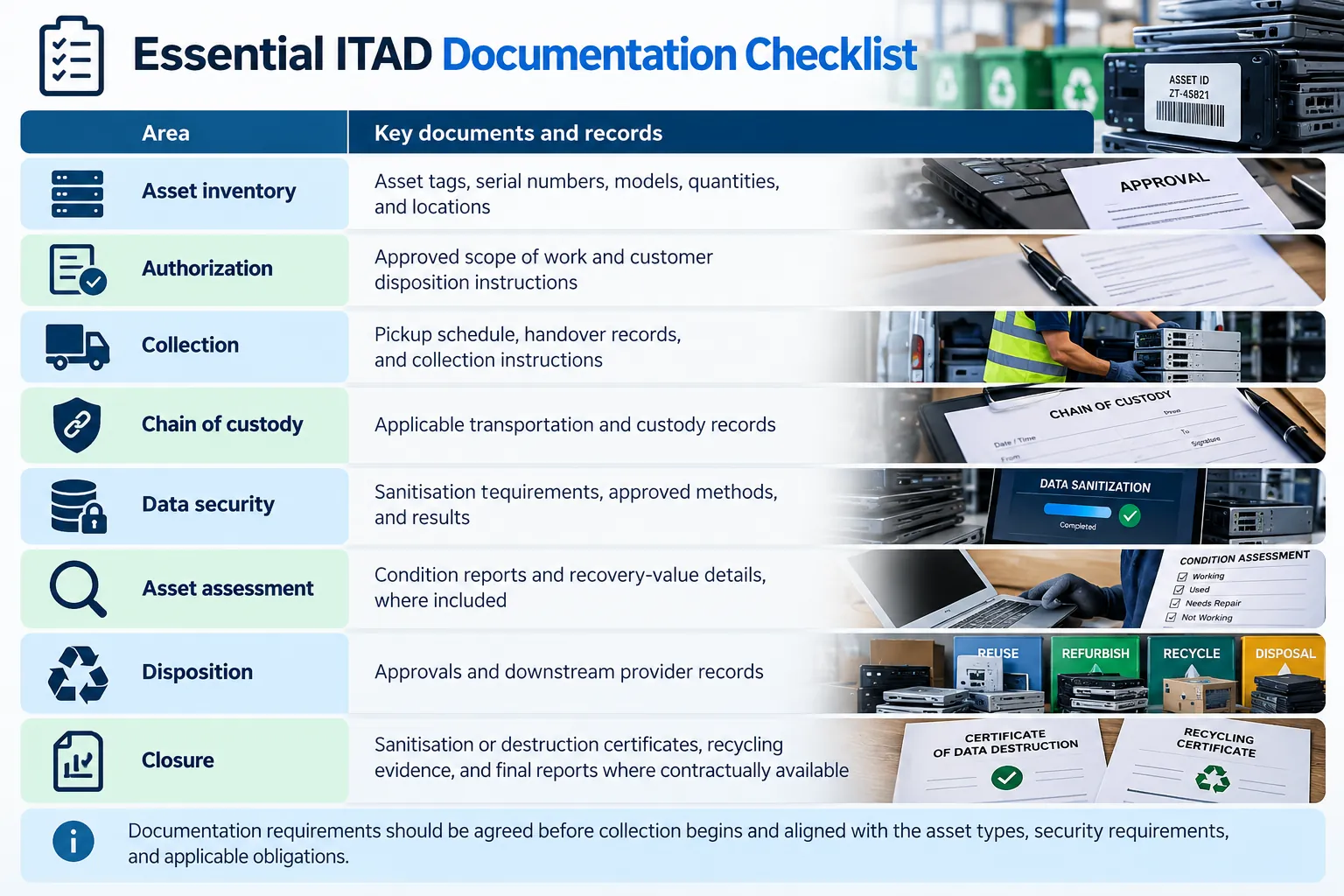
6. Managing Common ITAD Exceptions
Asset inventory mismatch: Record the variance, isolate affected items where appropriate, and obtain customer confirmation before proceeding.
Unreadable serial number or asset tag: Follow the agreed exception identification process and document any approved manual or unmatched-asset record.
Data sanitization failure: Quarantine the affected media, prevent unauthorized release, and follow the approved retry, destruction, or escalation process.
Asset subject to a legal hold or ownership restriction: Stop disposition of the affected item and obtain instructions from the authorized customer contact.
Damaged or unsafe equipment: Apply appropriate safe-handling procedures and involve a qualified specialist where required.
Unexpected recovery value: Provide the agreed assessment details and obtain approval under the commercial terms before resale or other disposition.
Missing certificate or downstream evidence: Track the outstanding documentation with the responsible provider and keep the record open until the evidence is received or an agreed exception is documented.
A documented exception process helps protect assets, maintain accountability, and ensure that unresolved items are not released prematurely.
7. Frequently Asked Questions
Does ITAD apply only to computers?
No. It may include servers, networking equipment, storage devices, end-user devices, peripherals, and other technology assets, depending on the agreed service scope.
Why is chain of custody important?
Chain-of-custody records document the transfer and handling of assets at relevant stages, supporting accountability, investigations, and audit requirements.
Can ZeNXL guarantee complete data removal?
No universal guarantee should be made. The sanitization method, media type, verification process, and supporting evidence must be agreed and handled by appropriately qualified providers. Customers should retain the required verification records.
Can retired IT assets be resold or refurbished?
Potentially, depending on asset condition, ownership, customer authorization, data-security requirements, and applicable regulations.
Will every asset receive a certificate?
The available evidence depends on the service, asset type, provider, and contractual scope. Required certificates and reports should be specified in advance.
What information is required for an ITAD proposal?
Provide asset categories, estimated quantities, locations, available inventory records, data-security requirements, desired disposition outcomes, and reporting expectations.
8. Why Work with ZeNXL?
Retiring IT assets requires a controlled process connecting physical movement, inventory accountability, data-security requirements, and final disposition.
ZeNXL can coordinate agreed ITAD activities and relevant qualified partners, helping businesses maintain clearer asset visibility and supporting records throughout the process.
Our approach focuses on:
- Asset accountability Inventory reconciliation and documented handovers.
- Data-security coordination: Tracking agreed sanitization requirements and evidence.
- Controlled disposition: Documented approvals and authorized outcomes.
- Operational visibility: Asset status reporting and exception follow-up.
- Value recovery: Coordination of suitable reuse or recovery options where available.
The objective is to help businesses manage retired technology assets through a more structured, transparent, and accountable process.
Planning to Retire IT Assets?
Whether you need to retire end-user devices, networking equipment, servers, or other technology assets, ZeNXL can help assess your requirements and coordinate an appropriate ITAD workflow within the agreed service scope.
Share your asset categories, quantities, locations, data-security requirements, and desired disposition outcomes with our team.
Protect Data. Recover Value. Dispose Responsibly