

SCOMET in Indian Exports: What Every Exporter Should Know
Not Every Product Can Be Exported Under Standard Procedures
Export compliance involves more than preparing invoices, packing lists and shipping documents. Certain products, technologies, materials and software may be subject to additional controls because of their strategic, military, nuclear or dual-use applications.
In India, these items are regulated under the SCOMET framework. Understanding the applicable controls before committing to an export shipment can help businesses avoid delays and regulatory complications.
What Is SCOMET?
SCOMET stands for Special Chemicals, Organisms, Materials, Equipment and Technologies.
It is India’s export control framework for specified dual-use, military-related and nuclear-related items, including materials, equipment, software and technology.
The framework is administered primarily by the Directorate General of Foreign Trade (DGFT), with certain categories handled by other designated authorities. SCOMET is incorporated into Appendix 3 to Schedule 2 of the ITC (HS) Classification of Export and Import Items.
What Products Fall Under SCOMET?
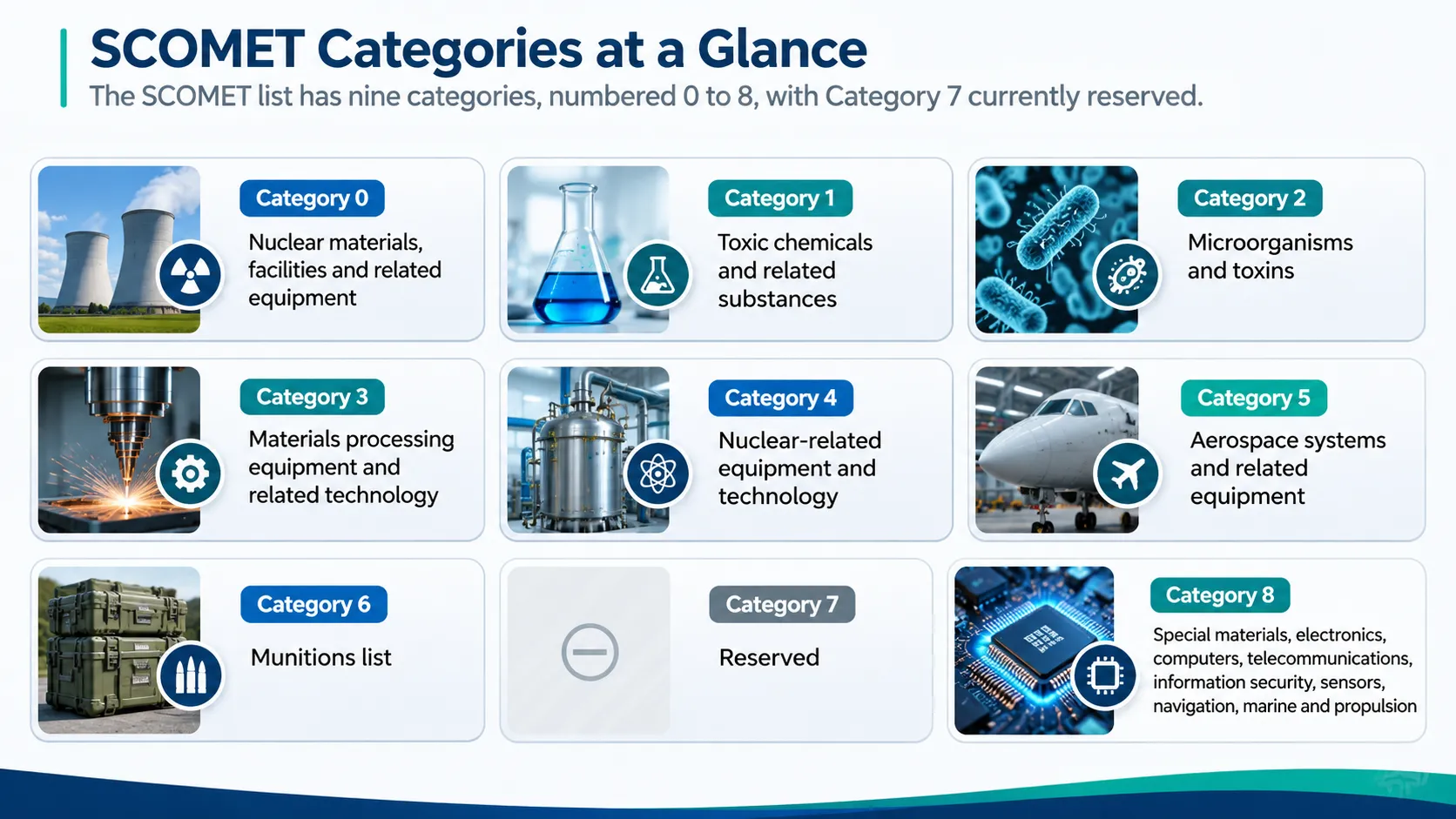
How Should Exporters Approach SCOMET Compliance?
A practical compliance review should begin before the shipment is ready for dispatch.
Identify the product: Gather technical specifications, model numbers, functions and supporting documents.
Review the SCOMET list: Check the current Appendix 3 of Schedule 2 of ITC (HS) for applicable entries.
Assess the transaction: Review the destination, end user, end use and intermediary parties.
Determine authorization requirements: Identify the applicable licensing authority and route. Certain transactions may qualify for general authorizations subject to specific conditions.
Prepare documentation: Assemble technical documents, end-user and end-use details, declarations and required reports.
Maintain records: Keep classification assessments, approvals, shipment documents and reporting records.
SCOMET Classification Is Different from HS Classification
An HS code is used for customs and trade classification. SCOMET classification is a separate strategic export-control assessment.
Specialized electronic components, telecommunications equipment, sensors, chemicals and technical software may require careful review depending on their technical characteristics—even when their commercial descriptions appear ordinary.
What Changed Recently?
DGFT issued Notification No. 31/2025–26 on 23 September 2025, revising the SCOMET list to align with updates from multilateral export control regimes. The notification stated that the revised list would take effect 30 days after issuance.
Exporters should consult the latest DGFT notifications and applicable procedures rather than rely on an older classification.
The ZeNXL Perspective
SCOMET compliance should be considered at the beginning of an export transaction—not when cargo is already packed and ready for dispatch.
For businesses exporting specialized equipment, electronics, industrial products or technology, early classification and compliance review can help reduce preventable shipment delays and regulatory complications.
ZeNXL supports businesses with international trade and logistics coordination, connecting documentation readiness, customs processes and shipment execution. SCOMET licensing and technical classification should be handled with the appropriate qualified trade-compliance specialists and authorities.
A shipment is ready only when both its logistics and regulatory requirements are ready.
Have Questions About Export Documentation?
Contact ZeNXL to discuss your international logistics and trade-compliance coordination requirements.